N.º 05 / 05
Venezuelan Observatory of LGBTIQ+ Violence
The evidence was already there. What was missing was the telling.
The Observatory has something most organisations do not: evidence of its own. It documents cases of violence and discrimination against LGBTIQ+ people in Venezuela, publishes reports and receives testimony. The problem was never producing information — it was making that evidence understandable, searchable and usable. It was published, but there was no structure that let anyone put it in context or act on it. This is a problem of information architecture and access before it is a problem of design.
View site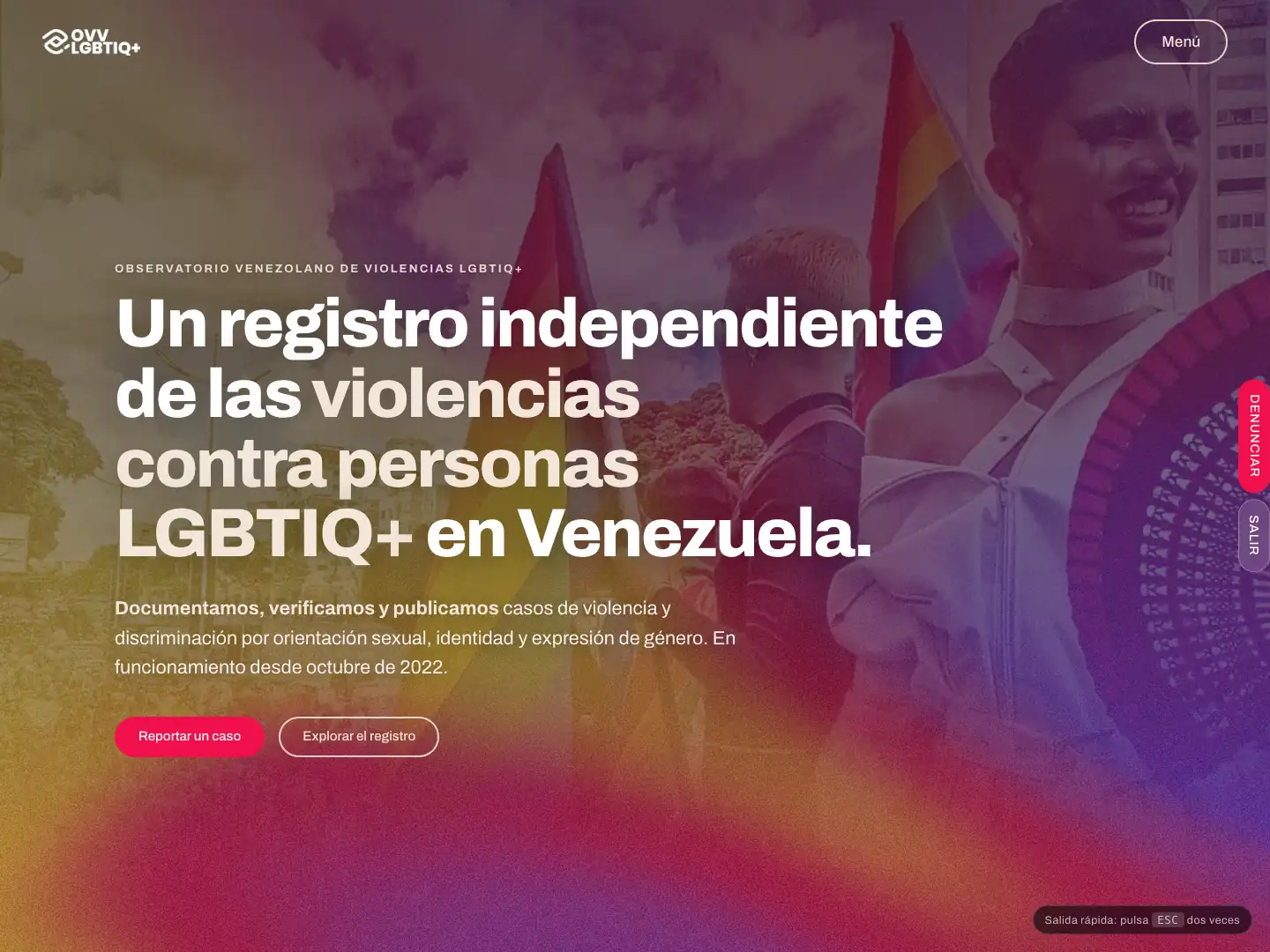
The decisions
The homepage says what the observatory produces
It used to identify the organisation without explaining what information it generates or how it is ordered. The entrance now takes a visitor towards the data, the stories or the reporting channel according to what they came for, instead of leaving them to decide with nothing to go on.
Each kind of content is now distinguishable
An alert, a statement, a press release, a news item and an event say different things and were sharing one graphic language, so a visitor could not tell what they were reading. Each genre now has its own treatment and colour, and is recognised before it is read.
Reports are explored rather than downloaded blind
They were published as loose files with no context and no hierarchy. They now have their own section, can be moved through, and what is inside is legible before anything is opened.
The reporting channel explains itself before asking anything
It was a generic form that never said what happens next or what protections exist. It also lives apart from the three-dimensional scene: a delicate process does not belong inside a piece that invites exploration.
What the section publishes and what stays in the report
The data section shows the aggregate: how many cases, of what kind and at what stage. The individual case, with its name and its circumstances, is read in the signed, dated report the site hosts in full. That boundary set the architecture of the project: what becomes a browsable page and what stays a document.
The archive outlives the domain that held it
The previous site is being decommissioned. A hundred and eleven pieces are recovered with their full text and their images inside the repository, not summarised and not linked back to the original. When the old domain goes, the archive is still there.